A Nonmedication Treatment Option for Depression
Depression can affect nearly every part of life. When antidepressant medications and psychotherapy have not provided sufficient relief—or medication side effects have become difficult to tolerate—Transcranial Magnetic Stimulation may offer another treatment option.
Transcranial Magnetic Stimulation, commonly called TMS, is a noninvasive outpatient treatment that uses focused magnetic pulses to stimulate areas of the brain involved in mood regulation. Treatment does not require surgery, anesthesia, or sedation.
At Bruce Hubbard MD, we have provided TMS treatment in San Diego since 2017. Our team has treated more than 1,500 patients and administered more than 55,000 individual TMS treatments at our Mission Valley location.
Every patient begins with an individualized psychiatric evaluation. We consider your symptoms, treatment history, health, preferences, and insurance requirements before recommending TMS or another form of care.
Contact our office at (619) 295-8005 to arrange a consultation to determine if TMS is right for you.

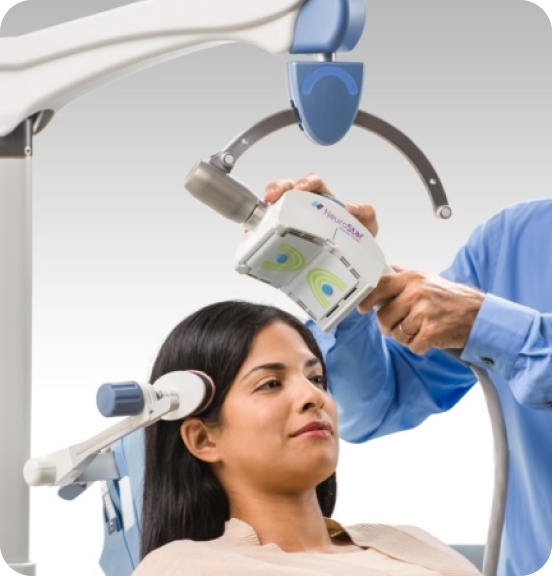
TMS is a noninvasive form of brain stimulation. During treatment, an electromagnetic coil is positioned against the scalp. The coil produces brief magnetic pulses that stimulate nerve cells in a targeted area of the brain.
For depression, treatment generally focuses on the prefrontal cortex, an area associated with mood regulation. The magnetic pulses are delivered from outside the body and do not require an incision or implanted device.
The U.S. Food and Drug Administration has classified repetitive TMS systems as medical devices for treating major depressive disorder. FDA-authorized TMS systems and protocols are also available for certain other conditions, including obsessive-compulsive disorder.
TMS is usually provided as one part of a broader treatment plan. Depending on your needs, that plan may also include medication management, psychotherapy, lifestyle changes, or another treatment such as SPRAVATO®.
Hear Ann Wycoff, Ph.D. explain the benefits of TMS for treating depression and anxiety.
Hear Dr. Bruce Hubbard, M.D. explain the benefits of TMS for treating depression and anxiety.
TMS is most commonly considered for adults with major depressive disorder whose symptoms have not improved adequately with previous treatment.
You may be a potential candidate if you:
Insurance plans apply their own medical-necessity criteria. Many require documentation of previous antidepressant treatment, psychotherapy, symptom severity, and other clinical information. Medicare coverage criteria, for example, can include unsuccessful medication treatment and an adequate course of evidence-based psychotherapy.
Not everyone with depression is an appropriate candidate for TMS. A psychiatric evaluation is necessary to determine whether it is suitable and safe for your particular circumstances.
Treatment-resistant depression generally refers to depression that has not improved adequately after appropriate treatment attempts.
This does not mean that depression cannot improve. It means that a different approach—or a more individualized combination of treatments—may be needed.
Traditional antidepressants work through chemical systems throughout the body. TMS takes a different approach by directing magnetic stimulation toward a targeted area of the brain. Because it is not a systemic medication, TMS does not generally cause common antidepressant-related effects such as weight gain, sexual side effects, or digestive symptoms.
Patients should continue taking or changing medications only as directed by their prescribing provider. TMS does not automatically replace psychiatric medication, and treatment plans vary from patient to patient.

Certain TMS systems and treatment protocols have also received FDA authorization for obsessive-compulsive disorder.
OCD treatment differs from depression treatment in its target, coil placement, treatment protocol, and clinical preparation. The FDA first authorized a deep TMS system for OCD in 2018, and additional systems have subsequently received clearance.
Insurance coverage for OCD treatment may be more limited than coverage for depression and depends on the individual plan.
Patients interested in TMS for OCD should receive a detailed evaluation to confirm the diagnosis, review previous medication and psychotherapy, and determine whether the available protocol is appropriate.
Our practice has provided TMS since 2017 and has administered more than 55,000 treatments to more than 1,500 patients.
That experience includes much more than operating the equipment. It includes evaluating treatment histories, identifying potential candidates, navigating insurance requirements, monitoring symptoms, adjusting treatment when clinically appropriate, and helping patients complete a demanding multiday treatment schedule.
We are a psychiatric practice, not a standalone procedure center.
Our team can consider TMS within the context of your complete treatment plan, including:
If TMS is not the best option, we can discuss other evidence-based approaches.
Patients do not all experience depression in the same way. We use clinical evaluations and standardized symptom questionnaires to monitor progress and guide treatment decisions.
Your treatment plan may be adjusted based on tolerability, symptoms, clinical response, and the specific TMS protocol prescribed.
Insurance approval for TMS often requires detailed documentation of previous treatment.
Our team assists with:
Authorization is not a guarantee of payment, and coverage varies by plan.
TMS is generally provided over several weeks. Patients become familiar with the team members administering and monitoring treatment, creating a consistent and supportive treatment experience.
The process usually begins with a brief intake conversation. We gather basic information about your symptoms, insurance, psychiatric care, and previous treatment.
This helps us determine the appropriate next step and identify information that may be needed for an evaluation or insurance review.
A psychiatric provider reviews your diagnosis, symptoms, medical history, medications, previous treatment, and potential contraindications.
The evaluation is also an opportunity to compare TMS with other available options. A recommendation is made only after reviewing your individual circumstances.
If TMS is recommended, our staff reviews your insurance benefits and prior-authorization requirements.
You may be asked to provide:
Complete records can help avoid delays.
Before regular treatment begins, the clinical team identifies the correct treatment position and establishes an individualized stimulation level.
During this appointment, the magnetic coil is positioned on the scalp and brief pulses are used to measure a physical response. This information helps determine the treatment settings.
Mapping usually takes longer than a regular treatment session.
During treatment, you remain awake and seated in a comfortable chair. The coil rests against the scalp while repeated magnetic pulses are delivered.
You may hear clicking sounds and feel tapping or muscle movement around the scalp, forehead, or face. Hearing protection is provided and should be worn during treatment. FDA guidance identifies hearing protection as an important precaution during TMS.
Depending on the prescribed protocol, a treatment session may last from several minutes to approximately half an hour.
We use standardized questionnaires and regular clinical check-ins to monitor your response.
Improvement may be gradual. Some patients notice changes earlier, while others do not recognize meaningful improvement until later in the treatment course.
Symptoms may also improve at different rates. Sleep, energy, motivation, concentration, anxiety, and mood do not necessarily change at the same time.
Near the end of the treatment course, the clinical team reviews your progress and discusses follow-up care.
Recommendations may include:
A typical depression treatment course is provided five days per week for several weeks, followed by a shorter taper period. The exact number of treatments and treatment schedule depend on the prescribed protocol, insurance authorization, clinical response, and individual circumstances.
Consistency is important. Missing frequent sessions may interfere with the planned treatment course.
Some newer TMS protocols use shorter individual sessions, but a shorter appointment does not necessarily mean fewer treatment days. Your provider will explain the protocol recommended for you.
Most patients describe a tapping sensation beneath the coil. Some also notice movement in the forehead, face, or jaw during stimulation.
The sensation may feel unusual or uncomfortable at first. Many patients become more accustomed to it during the first several sessions.
The treating team can assess coil position and treatment settings when discomfort occurs. Patients should always tell the treater about pain, headache, facial movement, or any new symptom rather than attempting to tolerate significant discomfort without mentioning it.
TMS is generally well tolerated, but all medical treatments have potential risks.
Common side effects can include:
These effects are often mild and may lessen as treatment continues.
A seizure is a serious but uncommon potential risk. Your provider will review medical history, medications, substance use, sleep, and other factors that could affect seizure risk.
TMS may not be appropriate for people with certain magnetic-sensitive metal objects or implanted electronic devices in or near the head. Examples may include some cochlear implants, implanted stimulators, aneurysm clips or coils, and metal fragments. Dental fillings and standard braces are not automatically disqualifying, but all implants and metal exposure should be disclosed.
FDA safety information also advises patients with a seizure history to discuss that history with their healthcare provider.
A complete safety screening is performed before treatment.
TMS does not require anesthesia or sedation.
You remain awake throughout treatment and can communicate with the treater. After a routine session, patients can generally drive themselves and return to normal activities.
This differs from electroconvulsive therapy, which requires anesthesia. Medicare coverage guidance describes outpatient TMS as not requiring anesthesia or analgesia and distinguishes it from ECT.
TMS and SPRAVATO® are both used for certain patients with difficult-to-treat depression, but they are different treatments.
Neither treatment is automatically better for every patient. The right option depends on diagnosis, previous treatment, medical history, insurance coverage, scheduling needs, preferences, and clinical judgment.
Learn more about SPRAVATO® treatment.
Many commercial insurance plans, Medicare plans, and TRICARE plans provide TMS coverage for eligible patients with major depressive disorder.
However, requirements vary considerably. A plan may consider:
Coverage for OCD or other indications may follow different requirements or may not be available under every plan.
Our staff will review benefits and obtain authorization when required. We will also discuss known out-of-pocket costs before treatment begins whenever that information is available.
“I spent 22 years living with depression and now I have full range of emotions that I’ve never experienced before, and a new outlook on life. Before beginning treatment, I was non-functioning and almost completely non-verbal. My sleep schedule was non-existent, my energy levels were very low, and I had to pause my schooling because I was unable to even talk to people.
By week two of treatment, not only was I sleeping better and waking up refreshed, but those around me noticed a significant change. I began talking so much I joked that my therapist would have to teach me to be quiet. This treatment has changed my life for the better. I would highly recommend TMS to anyone suffering from severe depression.“
“I noticed immediately an improvement and so did the people around me. That heavy weight of depression was lifted and I felt good. I’m happier than I’ve been in years. The medicines weren’t working so I got proactive and tried this. I’m so patient with my husband now. I don’t have that anger anymore. I laugh every day many times and that’s really new. I’ve never been to a place with so much empathy and compassion. I felt I could let down and show it all. The staff here is deeply invested in their patients. What I experience now is positivity. I guess that’s the right word. My husband is so happy with the results. I didn’t smile for so long. I don’t have the moodiness. There are so many depressed people in the world that this will help. If anyone wants to email me or talk with me I’d be happy to talk with them.”
TMS therapy is well tolerated and has been proven to be safe in clinical trials. The most commonly reported side effects related to treatment were scalp pain or discomfort during treatment sessions. These side effects were generally mild to moderate and occurred less frequently after the first week of treatment.
Our services are covered by most commercial health insurance plans in addition to Medicare and Tricare. Please have your health insurance information at hand when you call to schedule an initial evaluation. Our TMS Coordinator will check your benefits and assist you in requesting prior authorization.
Results have persisted for at least one year for most subjects followed by researchers. Many patients report results lasting several years.
Anyone who is currently depressed may be a candidate for TMS. TMS is especially beneficial for those who have not adequately benefited from antidepressant medications, or who cannot tolerate the side effects of these medications.
The research shows that a small number of patients may experience a mild, dull headache either during or right after treatment. It subsides within an hour or two. We rarely see this side effect but recommend that the patient take Tylenol before treatment if they experience this. We have only seen this side effect in the first week of treatment, and we rarely see it at all. There is only one other “side effect” that we have seen in our experience in administering TMS to over 400 patients. About 50% of patients will experience an “emotional dip” at some time during their treatment. This usually occurs at about the third week and consists of a temporary return to the level of depression they felt when they first started treatment. The “dip” usually lasts for 2-5 days. In rare circumstances it can last up to two weeks. It appears to be correlated with the presence of past trauma. Many patients do not experience a dip at all. It is believed by some experts that when we stimulate the prefrontal cortex, repressed feelings that are stored in that area of the brain are also stimulated, causing those old, painful feelings to surface. If a dip occurs, we watch the patient closely and provide extra support during this period. The patient schedules in-person check-ins with Dr. Wycoff as often as needed. Dr. Wycoff stays in close contact with the technician delivering the daily treatment and with Dr. Hubbard, our psychiatrist. Dr Hubbard will meet with the patient in-person if indicated. When the patient is reminded that this is a normal and expected part of treatment, they tend to relax and feel better. The dip will gradually subside and it is at this point that the effects of TMS tend to gain momentum. An emotional dip is a sign that the treatment is working. Although the “dip” is unpleasant it can be an indicator of a significantly positive result by the end of treatment.
Yes. We do not want the patient to make any substantive changes to their regular medication routine while undergoing TMS. After the patient has completed TMS they can discuss with their provider whether it is appropriate to gradually discontinue medication. Patients should never stop their medication without the supervision of a medical provider, as abrupt discontinuation of an antidepressant may have serious adverse effects.
Yes, TMS treatment is noninvasive and the patient is not sedated or medicated for the treatment. After treatment the patient drives home and continues their normal routine.
TMS is FDA approved for the treatment of depression. There are twelve years of solid, high quality, peer reviewed research supporting TMS. We have treated over 400 patients and have not seen any harmful effects to any of our patients. The majority of patients experience a significant reduction in depression which, according to the research and our own experience, lasts for at least one year but much longer for many.
According to the research and our experience, younger patients tend to get an earlier effect. Patients in their 20’s often feel an effect by the 3rd or 4th treatment which gradually gains momentum. Patients in their 40’s and 50’s typically get an effect after 2-3 weeks. Older patients may not feel an effect until the 4th week of treatment. If a patient only begins to get a solid effect much later in the treatment protocol, we will often ask their insurance to give them ten more treatments. If their insurance denies our request, we will often give ten extra treatments at no charge. We have seen patients benefit significantly from ten more treatments if they only begin to feel a significant effect later in the protocol. Our goal is to pay close attention to each patient’s individual experience and adjust treatment when needed to get each patient the very best result possible.
Yes. Depression and anxiety frequently co-exist. The typical TMS protocol delivers a magnetic pulse to the prefrontal cortex on the top left side of the head typically reduces both depression and anxiety symptoms together. However, some patients are experiencing severe anxiety in addition to depression. For those patients we may treat the top right side of the head in addition to the left side treatment.
Choosing the right provider is important for treatment success. Learn what to look for when evaluating your options:
Medical Review
This information is provided for educational purposes only and is not intended as medical advice or as a substitute for an evaluation by a qualified healthcare professional.
Last Reviewed: July 2026
Medical Reviewer: Bruce Hubbard, MD
Medical Director

Emergency Notice
This website is not intended for medical emergencies. If you are experiencing a medical or mental health emergency, call 911 or go to the nearest emergency department. If you are having thoughts of harming yourself or others, call or text 988 or seek emergency assistance immediately.